Friday, September 21, 2012

Basil Basics – September 21, 2012


I grow basil every year and I especially like to grow the purple kind.  It doesn’t taste any different, but it is really pretty on pizza, tarts and salads.  My favorite is orange salad,but we often make Caprese salad as well when we have lots of tomatoes.  Here are both simple, fresh recipes:

Caprese Salad

Sliced fresh tomatoes
Sliced fresh mozzarella
Basil leaves
Extra Virgin Olive Oil

Layer the first three ingredients.  Drizzle olive oil on top with a little salt and enjoy.
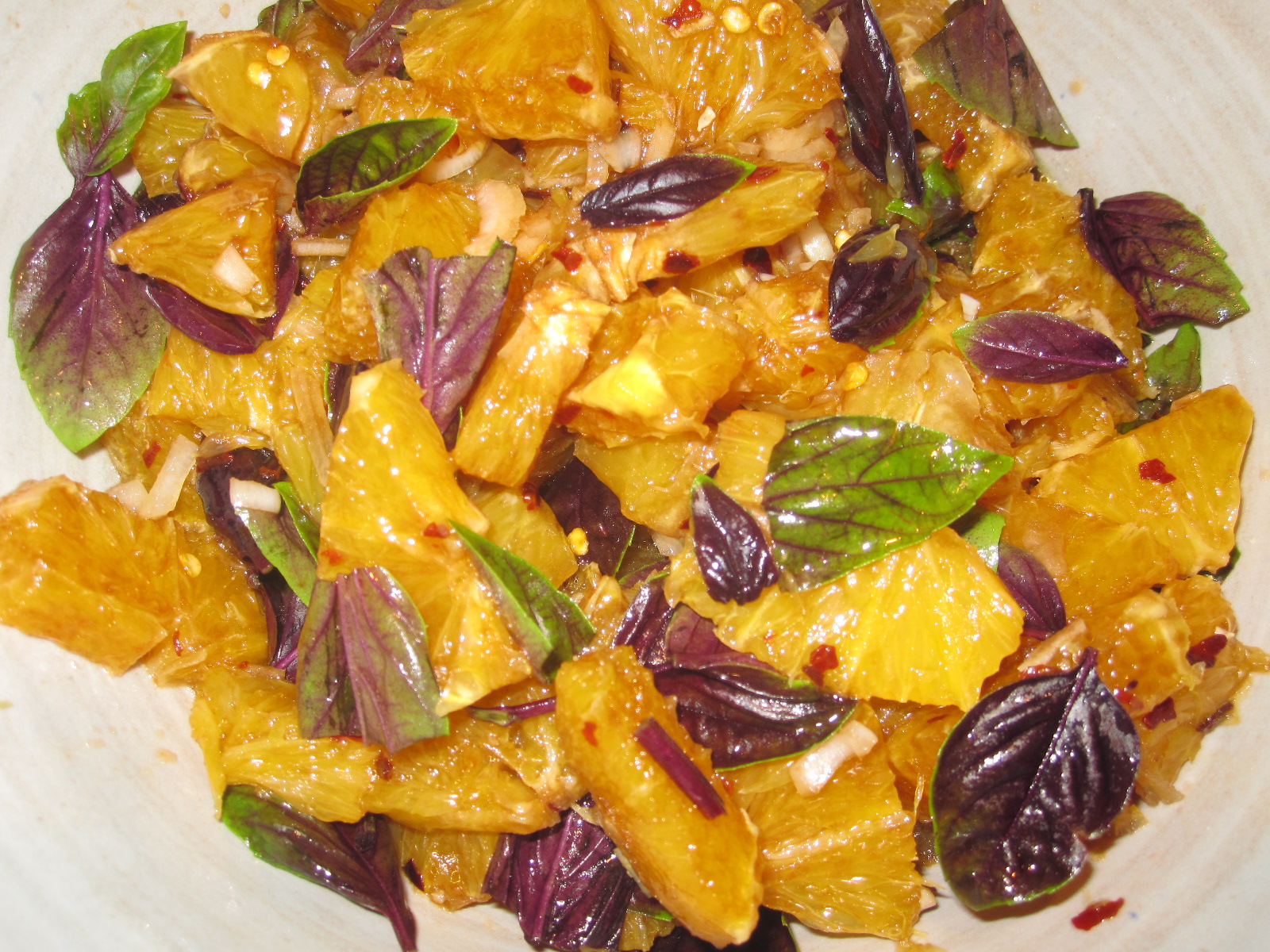

Orange and Basil Salad

Navel oranges separated in sections
Fresh basil leaves (looks great with purple basil)
Red onion or radish rings

Dressing #1 -
Olive Oil
Pinch sugar
Salt and pepper

Dressing #2 –
1 T. Balsamic Vinegar
1 T. Red Wine Vinegar
1 tsp. Lime Juice
1 T. Olive Oil
1 tsp. Sugar
1 tsp. Red Pepper Flakes
Salt and Pepper

Mix and enjoy!

The great thing about basil is that the more you use it, the more it produces, so even if you aren’t using it, pinch off the flowers as they develop so new leaves start.  Most years, I cut back at least one plant and bring it in for the winter before replanting in the Spring, but basil is easy to find as small plants in the Farmer’s Market and can be grown from seed if you start early enough.

I also store basil by pulling off the leaves and keeping them in a zip lock bag in my freezer during the winter.  If you prefer, you can make pesto and pour into ice cube trays.  Then, just pop these cubes into a zip lock bag and defrost as you need for recipes.

My friend Becki Winchel also has a great use for basil I had never heard of before.  You steep the leaves in boiling water like a tea.  Then, when cooled, put in a spray bottle and spray around your kitchen for a safe way to keep fruit flies from gathering.  I have to try this because we are eat up with fruit flies this year!!!!

Saturday, September 15, 2012

Growing and Harvesting Mushrooms – September 15, 2012


John and I are members of the Billy Goat Hill Garden here in Louisville.  In addition to our bed with tomatoes, okra and cucumbers, I volunteered to help with the community garden mushroom garden.  Limbwalker Tree Service donated several large sections of hardwood for our cause that we stacked in a cool tree-covered area.  You simply buy plugs of shiitake mushroom spores.  They look like large pills.  You drill into the hardwood and insert a plug in each hole (we did 100) and then you coat the top of each hole with heated food grade wax (I saved some from a cheese purchase and heated with our little propane torch used to warm the top of cream brulee) to keep bugs out.  Then comes the hard part – you wait a year for the shiitakes to grow. 


I have an advantage though in that a group of boy scouts planted mushrooms 4-5 years ago and although we thought they were dead, (each log will stop producing mushrooms in about 5 years as the log completely dies and provides no nutrition for the mushroom spores) mushrooms appeared everywhere after the big rain following Labor Day.


I used my mushroom harvest in a new recipe for winter squash.  I have been interested in learning more about Moroccan cooking and these are two recipes that used local harvest and were delicious to boot:


Moroccan winter squash

1 T. butter
1 T. olive oil
1 diced onion
4 minced cloves garlic
2 tsp. ground cumin
1 cinnamon stick
Salt and pepper to taste
1 pound butternut squash, large dice
3/4 pound red potatoes, large dice (or do with all squash and no potatoes)
2 cups broth
2 cups caned chickpeas, drained
1 (14-ounce) can diced tomatoes, with juices
Several Shiitakes in large slices
Pinch saffron threads

Heat butter and olive oil in a heavy-bottomed saucepan over medium heat.  Add onion, garlic, cumin, and cinnamon, and season with salt and freshly ground black pepper. Cook, stirring occasionally, 5 minutes.  Add squash and potatoes, season with salt and freshly ground black pepper, stir to coat, and cook until just tender, about 3 minutes.  Add broth, chickpeas, tomatoes and their juices, mushrooms and saffron.  Bring mixture to a boil then reduce to low. Cover and simmer until squash is fork tender, about 10 minutes.

Remove from heat and if you choose, stir in preserved lemon and olives. Serve over couscous garnished with cilantro, almonds, and yogurt.


Moroccan Eggplant with Garbanzo Beans

1 onion, sliced thin
5 cloves garlic, minced
1 T. olive oil (or can use broth)
1 red bell pepper cut in small pieces
1 eggplant cut in 1 inch pieces
Pinch of red pepper flakes
2 tsp. turmeric
1/2 tsp. garam masala
1 tsp. cumin
1 tsp. paprika
1 15 oz. can garbanzo beans, drained
1 1/2 c. lentils, soaked and drained
1 large tomato, chopped with juices reserved
1 1/4 c. broth
1/2 c. raisins
Salt and black pepper to taste
Can garnish with chopped parsley or cilantro

Heat oil in heavy bottomed pan on medium.  Sauté onions for 5 minutes.  Add garlic, bell pepper, eggplant and spices and mix together for one minute.  Add broth and tomatoes and stir, cover and cook 10 minutes.  Add beans and lentils and cook another 5 minutes.  Add raisins and cook final 5 minutes or until consistency is correct.  Season with salt and pepper and garnish with fresh herbs.

This meal is very healthy with high concentrations of molybdenum, vitamin C, manganese and fiber.  You can serve as a side or it makes a great vegetarian meal with bread.

One thing I learned about mushrooms through our harvesting is that they are very susceptible to water content.  When I first picked them, they were very dry and I was afraid not good for cooking.  The second harvest was right after a rain and they were too wet.  I found the best way to deal with this was to store them in the refrigerator in a plastic bag wrapped in paper towels.  A dry paper towel helped soak up the extra water with the wet mushrooms and a wet towel helped the dry mushrooms come back to life. However, if you want to store the mushrooms for longer than a week, drying them is a great method.  You can use a food dehydrator or allow to dry in the oven at low.  Keep these in a cool, dark place until you are ready to use in recipes.  They are great in soups and stir frys.